
Sensory Overload
The sensory challenges presented by worship services in the modern church aren’t exclusive to the autism community.

This post is the eighth in a series on why the presence in the home of a child with a mental health condition often has a large, negative impact on family church attendance. Click here to explore the previous posts in the series.
Thanks to the rapid expansion of the “special needs” or disability ministry movement and societal-wide initiatives to promote autism awareness, the sight in church of a child or teen wearing headphones is much less likely to evoke stares or second glances compared to five or ten years ago. Sensory processing differences have come to be associated with autism - one study of children ages 3-6 reported that 95% experienced a significant degree of sensory dysfunction, but professionals have increasingly come to recognize sensory issues associated with a broad range of mental health conditions, especially ADHD and anxiety disorders.
In recent years, the thrust of work done under the guidance of the National Institute for Mental Health (NIMH) to identify the most fundamental causes of mental illness has focused on traits that cut across all mental health conditions, and identifying the biologic origin of sensory differences has been an important component of their work.
Sensory Processing Disorder is not currently recognized as a stand-alone medical condition, but sensory processing difficulties are far more common than previously recognized. Estimates suggest that 5% -16.5% of the general population experiences a significant degree of sensory dysfunction.
The capacity to integrate sensory information is an essential component of normal development and difficulties are closely associated with challenges with emotional and behavioral self-regulation, social interaction and the ability to develop effective coping skills.
Kids and adults with sensory processing differences are overly sensitive to sound, light, touch and taste than their same-age peers. They often experience difficulty with gross and fine motor coordination. They may be very particular about the feel of clothes against their skin, may overreact when touched by others, and often experience loud noise or potent smells (perfume or cologne) as noxious. They may be extremely picky eaters. They frequently struggle to sit still. Preoccupation with the source of their discomfort is more common in unfamiliar environments.
Our ministry received a letter from a young adult student ten or so years ago that represents the best description the experience of attending church as a person with sensory processing differences:
I have Aspergers, ADD, depression, and anxiety. I am a student who recently moved to do more studies. I am very nervous about joining a new church because of the experiences I have had in church before. I so find the loud rock concert type services completely overwhelming. However, the social aspects at the quieter services are just as overwhelming as some very perky person pounces in on me. Although I typically like structure and routine, I do enjoy contemporary (less high services) for connecting with God. In addition, there is all that small talk around swarms of people wearing all sorts of perfume who do not understand when I talk loudly, change topics, or suddenly get distracted.
Coordinating getting myself to church and then balancing a cup while talking to people is a challenge. When I finally do get the courage to introduce myself to someone, it turns out that I met the person the week before but did not remember his or her face. I am never on time for church and it is a good day when I remembered both my money and kindle bible. Real bibles are too distracting as the smooth pages are too much fun to feel! I feel left out as others display their feelings and get emotional during worship. I never know where to sit and always leave belongings behind after church.
Ministry environments created with the express intent to be engaging to a broad population of young adults are often experienced as noxious by children and adults with heightened reactivity to sensory stimulation. Let’s consider the range of potential situations that would present challenges to families of kids with sensory processing difficulties.
The process of arriving at and departing from church. Churches are busy, noisy places on Sunday mornings. Lots of people crowded together in a confined space before and after worship services results in a space with a high decibel level and lots of bumping and touching. For someone with sensory process differences, the experience of being in a space where ten different conversations are taking place in a 20 foot radius is akin to the sound of fingernails on a chalkboard to a neurotypical adult. One church where we trained established a separate “sensory entrance” to their children’s ministry area, away from the hustle and bustle of their main check-in location. Another church converted their former “cry room” for infants into a “fragrance-free” zone on Sunday mornings.
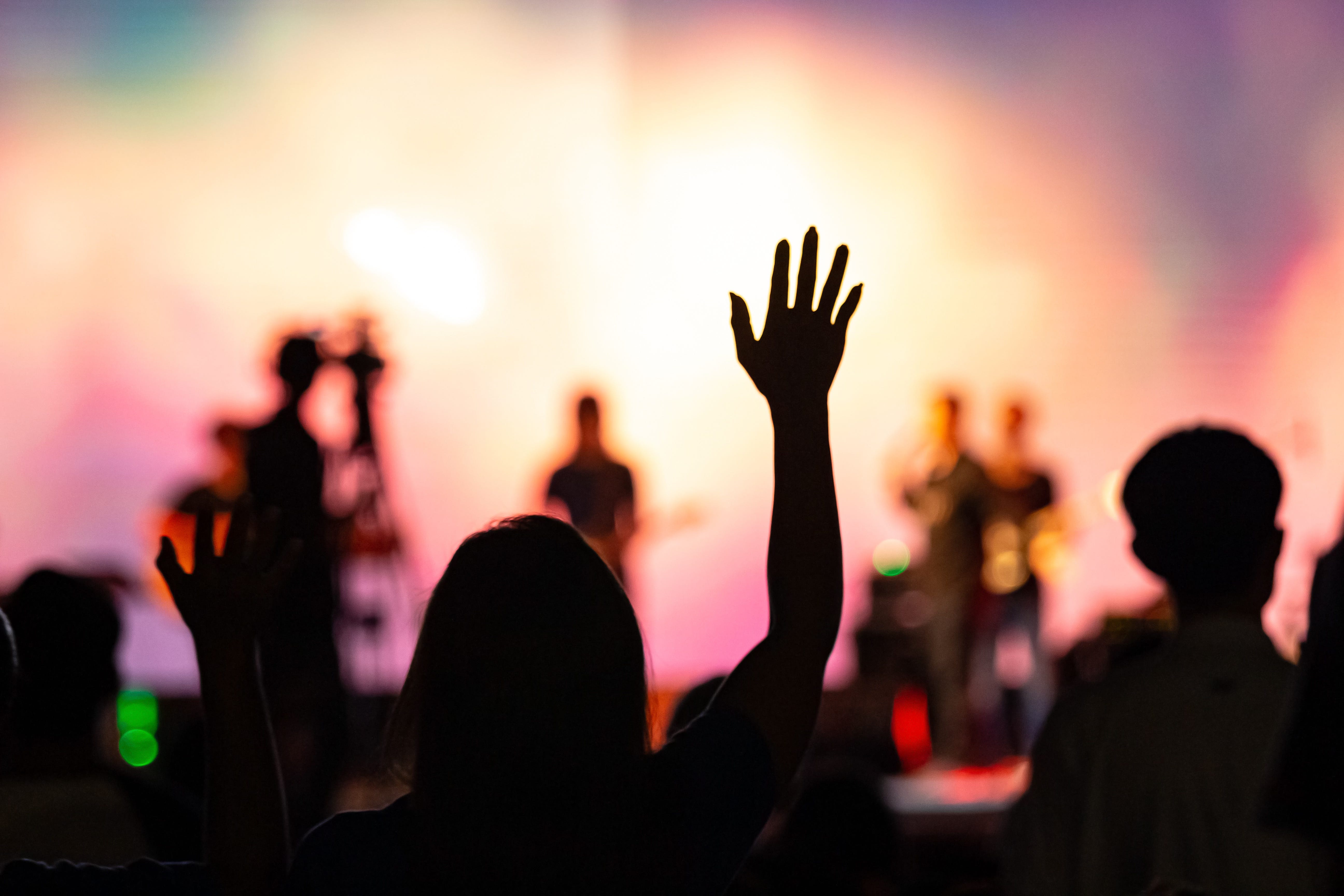
Portions of the service dedicated to worship through song. Some churches have resorted to very high-energy worship experiences for children and youth involving very loud music and bright lights in an effort to capture the attention of kids and adults who spend much of their week preoccupied by electronic devices. While this approach works for many, those with sensory processing differences may experience such a worship service as aversive. In children’s ministry, kids may have difficulty standing for long periods of time or performing the hand gestures that accompany the music. High levels of sensory stimulation decrease capacity for self-control - especially problematic for a child with a disruptive behavior disorder. One church developed a novel accommodation for one of my patients with an auditory processing disorder…they gave him an orange vest and put him on the parking team! He’d typically finish his job around the time the last song was winding down, allowing him to join the large group teaching and small group discussion that followed middle school worship. His dad was a pastor on staff at the church, so non-attendance wasn’t an option for him.
Sitting for an extended time in an adult worship service. The need to sit still for extended time in less than comfortable seating often represents a major challenge for kids with sensory processing difficulties. The executive pastor of a large Catholic Church we consulted with described their “bathroom brigade.” They had a spacious lobby with restrooms behind their worship center, separated by large glass walls. As their service progressed, he observed growing numbers of kids who were receiving accommodations in their parish school pacing back and forth in the lobby. Breaks in the worship service where attendees are encouraged to greet one another with handshakes and hugs can also represent a source of distress. My families from Catholic or Orthodox traditions described the use of incense in worship services, especially on holidays or special occasions as a sensory trigger.
Special events. Vacation Bible School typically combines high levels of physical activity with high levels of sensory stimulation. We’re observing a trend among churches with sizable disability ministries for offering sensory-friendly VBS experiences. Weekend retreats and mission trips in outdoor camp environments with novel or unfamiliar sleeping arrangements and food lacking the creature comforts of home are often avoided by kids with sensory processing differences.
There are concrete steps churches can take to be more accommodating to the population impacted by sensory differences. We dedicated an entire section in our guide for churches pursuing mental health outreach and inclusion to a process for reviewing and modifying the spaces where ministry takes place to promote comfort, self-control and spiritual growth. The key is to offer more sensory-friendly options that persons with sensory differences can access at church without having to self-identify as someone in need of accommodations. You’ll notice that theme if you re-read the section above outlining challenges at church.
Here’s an interview we recorded last September at our Mental Health and the Church conference with Daniel Rosati, a young adult with paranoid schizophrenia, in which he discusses his experiences of church in Colorado Springs. While his sensory issues at church are different than those of most young adults the ability to sit in a comfortable chair in the lobby of a church and watch the sermon on video are one option that makes a big difference for him.
One of the most impactful outreaches the church our family belongs to offers over the course of the year is a sensory-friendly Christmas Eve service. Christmas and Easter are typically the two days out of the year when families outside of the church might consider attending a worship service, and the majority of families who attend are from outside of the church, demonstrating the need for more sensory-friendly options.
Finally, our churches are far behind the culture when it comes to offering sensory-friendly spaces for attendees. This ESPN article from 2022 illustrates how far behind our churches are compared to our professional sports teams.
I asked GROK for the percentage of professional sports teams today with sensory-friendly spaces.
Given 153 major professional sports teams across MLB (30), NBA (30), NFL (32), NHL (32), and MLS (29) in North America, a conservative estimate based on the above suggests at least 50-60 teams have sensory-friendly spaces or accommodations. This number is likely higher as more teams have adopted these spaces since the data was last reported, with cities like Philadelphia achieving sensory-inclusive status for all major league venues.
I changed the question to ask the percentage of churches today with sensory-friendly spaces.
Given the lack of specific statistics, an estimate would be speculative. The trend suggests a small but increasing fraction of America’s approximately 350,000 churches have dedicated sensory rooms or areas, likely under 5%, with higher adoption in urban or progressive congregations.
Are the long term benefits of church attendance significant enough for us to put as much effort in welcoming guests with sensory processing differences as your local NFL or NBA team?